
Motivation That Fuels Us
Keep the energy running
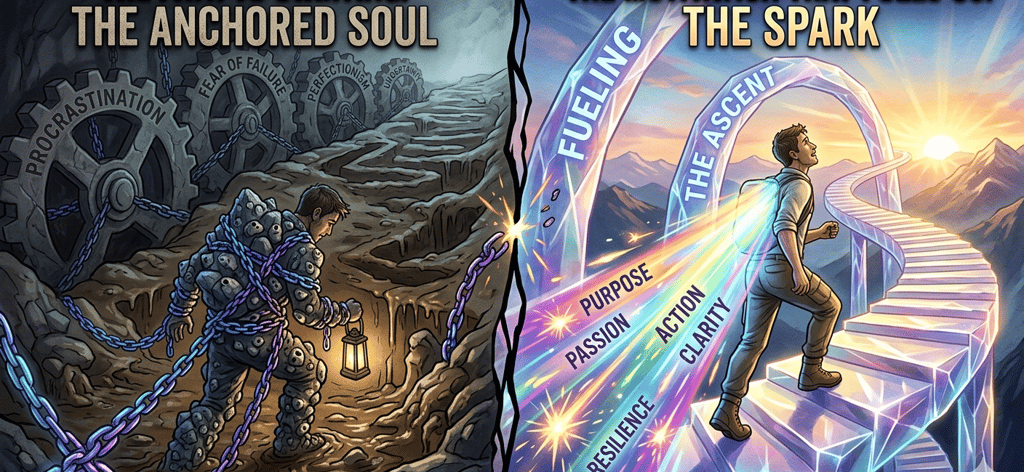
Late at night, two friends sat together talking about life. Both were unhappy with where they were. One wanted to lose weight, improve his health, and finally feel confident in his own body again. The other wanted financial freedom. He was tired of feeling stuck in the same routine, watching years pass while his dreams stayed only in his imagination.
For hours they spoke about everything they wanted to change. They talked about waking up early, exercising regularly, learning new skills, becoming more disciplined, earning more money, and building a better future. The conversation was filled with excitement. For that moment, both of them truly believed their lives were about to change.
Before leaving, one of them said confidently,
“Tomorrow will be different.”
And honestly, both of them meant it.
The next morning, one friend woke up and started.
Not perfectly.
Not dramatically.
But he started.
He went for a walk even though he felt lazy. He began learning after work even though he was tired. He slowly started changing his routine one step at a time.
The other friend also woke up with the same intentions but instead of beginning, he started planning.
He thought about the perfect workout plan.
The perfect time to start.
The perfect strategy.
The perfect mood.
The perfect version of himself.
Days passed.
Every night he still imagined a better future for himself, but his life remained exactly the same and this is where one of the biggest differences between people quietly begins. Some people move while others remain trapped in thought.
It is not always because one person is smarter, more talented, or more capable. Very often, the difference lies in something much deeper: the ability to convert thought into action.
Many people spend so much time mentally preparing for life that they never fully enter it.
They wait until fear disappears.
They wait until motivation feels stronger.
They wait until conditions become perfect.
But perfection rarely arrives.
Over time, overthinking slowly creates heaviness. Even small actions begin to feel difficult because the mind has turned simple beginnings into something emotionally overwhelming.
From a scientific perspective, getting started often requires a certain level of activation in the brain. Chemicals like dopamine and adrenaline create feelings of motivation, urgency, focus, and excitement. That sudden emotional rush is what makes people feel ready to take action.
For a short time, everything feels possible.
You feel inspired.
You feel energetic.
You feel mentally clear.
And during that moment, action feels easy but there is one problem.
That emotional rush never lasts forever.
Most people depend entirely on motivation to move forward. They begin when emotions are high, but when excitement fades, consistency disappears too. That is why so many people start strong and stop quickly.
The real challenge in life is usually not starting.
It is continuing after the emotional excitement fades away.
That is where consistency becomes important. Consistency does not come from temporary emotion alone. It comes from clarity.
When a person deeply understands why they want something, effort begins to feel meaningful instead of painful. The mind stops seeing action as suffering and starts seeing it as movement toward something valuable.
People stay consistent when:
they clearly understand what they want
they emotionally connect with the outcome
they logically believe their actions will improve life
In many ways, life operates through both emotion and logic.
Emotion creates the spark.
Logic creates direction.
Together, they create momentum.
If emotion is missing, people struggle to begin.
If logic is missing, people begin emotionally but quickly lose consistency.
That is why discipline is not only about force. It is about staying emotionally connected to your reason long enough for results to appear.
And before results even arrive, there is a more important question:
Can you stay consistent long enough to give results a chance to happen?
Because most people stop too early.
The truth is, we already know many of the answers in life.
We know exercise improves health.
We know effort improves financial stability.
We know learning improves growth.
We know discipline slowly changes life.
Yet knowledge alone rarely changes behavior.
If knowledge alone was enough, almost everyone would already have the life they desire.
Action usually begins when something emotionally triggers us.
Sometimes it happens after seeing someone living the life we want.
Sometimes it comes through pain, pressure, failure, fear, or inspiration.
Sometimes a person suddenly realizes how much time has passed while remaining stuck in the same place.
That realization creates movement.
Imagine yourself honestly for a moment.
How would you truly want your life to look?
Would you want freedom from constant financial stress?
Would you want a healthier and stronger body?
Would you want confidence, peace, stability, and respect?
Would you want to wake up feeling proud of the direction your life is moving in?
The moment you deeply visualize a better future, something shifts internally. The future stops feeling distant and starts feeling personal.
That inner shift becomes fuel.
And once that fuel is activated, life becomes surprisingly simple in principle.
If you consistently work on your body, it improves.
If you consistently improve your skills, your value increases.
If you consistently create value, opportunities begin appearing.
If you consistently work toward something meaningful, life slowly starts responding back.
Results may not come immediately, but action always creates movement.
Life responds far more to action than intention.
Many people spend years intending to change while remaining emotionally attached to comfort, fear, delay, or overthinking. Intention creates the illusion of progress, but reality changes only through repeated action.
Think of your actions like a machine.
A machine without fuel cannot move no matter how powerful it is.
Human action works the same way.
The fuel behind action is:
emotional drive — why you want something
logical clarity — how you will get there
Without fuel, motivation fades quickly.
With fuel, even small steps begin creating momentum.
And momentum changes everything.
Once movement begins, confidence slowly grows. Resistance becomes weaker. Small wins create belief, and belief creates stronger action. Over time, things that once felt difficult begin to feel natural.
That is why the most important step is often not a giant leap.
It is simply beginning.
Start before you feel fully ready.
Start before conditions become perfect.
Start even if your progress feels small.
Because almost everything meaningful in life grows slowly.
A healthy body is built through repeated healthy choices.
Financial stability is built through repeated effort and value creation.
Strong relationships are built through repeated care and understanding.
Confidence is built through repeated action despite fear.
Most transformations in life are not created through one dramatic moment. They are built quietly through small actions repeated consistently over time.
Nothing changes without action.
So stop waiting endlessly for the perfect mood, perfect timing, or perfect version of yourself.
Trigger that energy within you.
Hold onto the reason why you started.
Keep moving even when motivation fades.
Because in the end, people who move forward are not always the most talented or the most confident. They are often simply the ones who kept going.