
Relationships
It plays the most vital role in our life
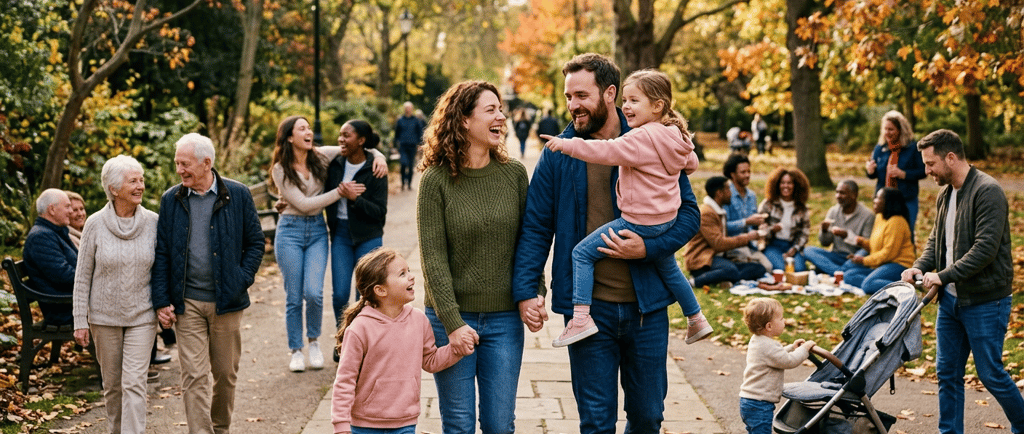
A man once imagined an unusual experiment. He thought, What if tomorrow I woke up and every relationship in my life disappeared—not through loss, but simply because nobody existed around me?
No parents checking if he had eaten. No friends sending messages. No spouse asking about his day. No children making noise. No colleagues calling. No neighbors greeting him. No expectations. No interruptions. No emotional drama.
At first, the idea felt attractive.
Complete freedom.
No responsibilities.
No compromises.
But as the day progressed, something unexpected happened.
Breakfast became silent. Work felt mechanical. Achievements lost meaning because there was nobody to share them with. Even entertainment became repetitive. The silence that initially looked peaceful slowly started feeling empty.
That day he realized something profound. Maybe relationships were never distractions from life. Maybe they were life itself.
From the very beginning of our existence, we live inside relationships. Before we understand language, before we understand success, before we understand who we are, we already exist inside a network of people—parents, siblings, relatives, teachers, neighbors, friends, mentors, colleagues, partners, children, and even strangers who shape our experiences in ways we may never fully notice.
Our life is not built separately from relationships. Our life is built through them.
What is fascinating is that almost everything we become comes through people. Our habits are learned from observation. Our values are influenced by experiences with others. Our confidence grows through encouragement. Even our wounds often come through relationships.
And yet, despite this, many of us fail to acknowledge their importance. When relationships are absent, we crave them. When relationships are present, we often want distance. Why does this happen?
Part of the answer may lie in human psychology.
Researchers studying human connection have repeatedly found that people are deeply social beings. Long-term loneliness has been associated with increased stress, lower emotional wellbeing, and reduced life satisfaction. Evolutionary scientists often explain that human survival depended not on individual strength but on cooperation. We survived because we built tribes, communities, families, and systems of trust.
Perhaps connection is not simply something we enjoy. Perhaps connection is part of who we are. Think about your own life. Imagine removing every person who contributed to your journey.
Who taught you language?
Who gave you opportunities?
Who comforted you?
Who challenged you?
Who inspired you?
When we remove relationships, we realize how much of ourselves was quietly built by others and yet something interesting happens.
When we meet new people, we become curious. If someone is charismatic, successful, intelligent, attractive, or confident, we naturally admire them. We become attentive. We speak politely. We appreciate their qualities.
But over time something changes.
Parents become “normal.”
Friends become “expected.”
Partners become “routine.”
Coworkers become “just people.”
Psychologists describe a similar pattern through adaptation—the human tendency to become accustomed to what once felt special. We stop noticing what becomes familiar. This may explain why people often appreciate others more after distance, conflict, or loss than during ordinary days. How many times have we heard someone say:
“I never realized how much they did for me.”
“I thought they would always be there.”
“I wish I had appreciated them more.”
Relationships rarely disappear suddenly.
Often appreciation disappears first.
This does not mean every relationship should be preserved. Some relationships become unhealthy, painful, controlling, or damaging and maintaining boundaries becomes necessary. But for healthy relationships, perhaps one of the greatest mistakes is assuming people will always remain available.
A simple thank you, a short conversation. listening without checking a phone, remembering birthdays.
Small actions often carry enormous emotional value but there is another side to this conversation. What happens when people are not available?
What if someone has no close family? No deep friendships? No partner? No support system?
Does that mean relationships disappear entirely?
Surprisingly, maybe not. Because there is one relationship none of us can escape.
The relationship with ourselves. This relationship is unusual because unlike every other relationship, it exists continuously.
You speak to yourself every day.
You judge yourself.
You encourage yourself.
You imagine conversations.
You create stories.
You revisit memories.
You make decisions.
Whether consciously or unconsciously, you are in constant dialogue with yourself and perhaps this is why some people can appear alone without feeling lonely.
They developed friendship with themselves. Nature gave us something extraordinary—an inner world.
A place where awareness, thoughts, emotions, memories, and identity meet.
Different traditions describe this differently. Some call it consciousness. Some call it inner self. Some call it awareness. Some simply call it being present.
Across generations, many teachings emerging from India explored this idea deeply—not to reject relationships but to understand that external relationships become healthier when our inner relationship becomes healthier.
This is one reason meditation has remained meaningful for centuries. Today, many people use meditation for stress relief, relaxation, or improving focus. Those benefits are valuable but perhaps meditation can also be viewed differently.
Not as escaping life but as meeting yourself. As creating space to observe thoughts, to understand emotions, to become less reactive and to become someone whose happiness is not completely dependent on external validation.
Because when the relationship with self becomes stronger, relationships with others often become lighter, healthier, and more genuine.
You no longer connect out of fear. You connect out of choice and maybe that is the balance life quietly asks from us.
Build relationships outside.
Build relationship inside.
Call your parents.
Value your friends.
Respect people who help you.
Appreciate strangers.
Stay present with your loved ones.
And sometimes—
Sit quietly with yourself.
Because at the end of everything, life gives us two extraordinary gifts.
People to walk beside us.
And a self that never leaves.
Cherish both.